Technical note
How a high-current machined D-SUB is actually made
Turning
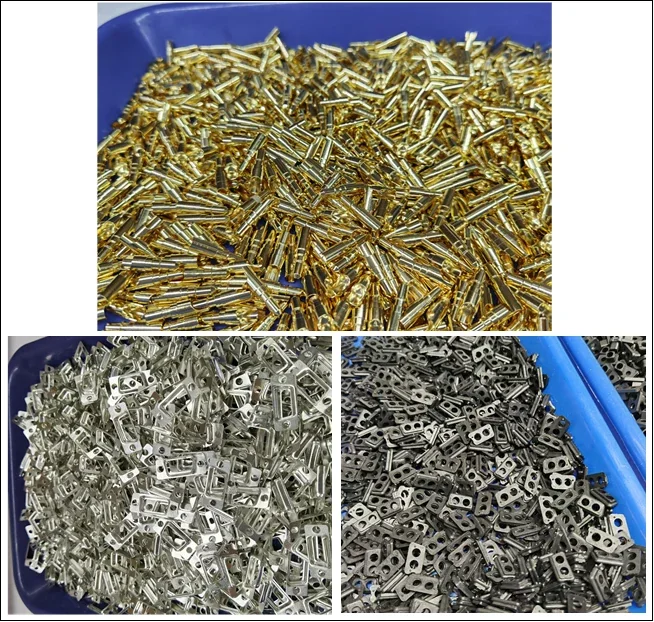
Machined contacts are turned from copper alloy bar to ±0.02 mm. That tolerance is what makes insertion force consistent. A stamped contact holds tolerance through its die; a turned contact holds it one piece at a time, so once the tool wears, the whole batch drifts. Inspect by piece, not by lot.
Deburring
Turning leaves fine burrs at the tip and the radius. Left in place they nodulate during plating, and the nodule wears through the gold within a few cycles. We run vibratory finishing followed by electrolytic deburring.
Plating
1.5 μm nickel strike, then 3 μm gold. The nickel is a diffusion barrier — without it, copper migrates into the gold and oxidises underneath within months, pushing contact resistance up.
Press-fit
The barbs on the contact body must hold at least 50 N in the PBT insulator. Too shallow and the contact backs out; too deep and the housing cracks.